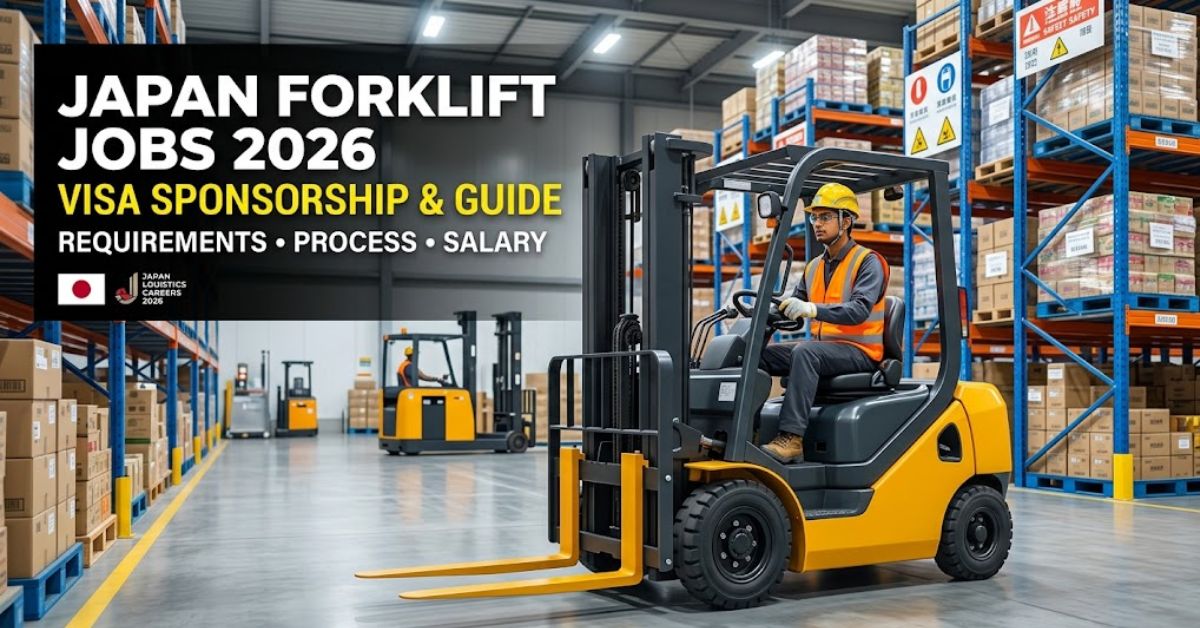
Japan Forklift Operator Jobs 2026: Visa Sponsorship & License Guide
Finding constant, well-paying warehouse hire in Japan has reached a momentous rotary point. As Japan faces an growing demographic crunch and extraordinary domestic supply-chain scarcities, the logistics, warehousing, and material-handling sectors are first broad legal ways for international talent. Barns and distribution hubs as of Tokyo and Kanagawa to Osaka and Fukuoka gradually rely on certified heavy equipment workers to keep raw goods and e-commerce consumer goods moving ably.
Securing a reasonable forklift operative position with formal entry permit funding requires an accurate indulgent of Japanese settlement rules, workplace security standards, and phonological benchmarks. Whether you are an skilled operator living ultramarine or a foreign countrywide already be a feature of in Japan on an remaining visa status, accepting the procedural context is vital to avoid sham hiring schemes and body a viable, sustainable occupation.
Overview: Japan’s Logistics Demand & the Forklift Sector
Japan’s logistics system is undergoing an unique restructuring, often stated to internally as the ongoing logistics tailback. E-commerce podia, cold-chain food merchants, maritime anchorage authorities, and automotive get-together plants face Spartan shortages of able logistics personnel. Forklift operators assist as the operational prop of these facilities, behavior multi-ton loads, palletized vessel unloading, and silo vertical plaguing.
Working as an developed vehicle operator in Japan is fundamentally unalike from warehouse roles in many Horse opera or Southeast Asian realms. Japanese warehousing culture residences strict emphasis on blocking maintenance, precise millimeter-level pallet alignment, also needed point-and-call (Shias keno) safety proprieties. Rather than solely moving boxes hastily, employers prioritize risk prevention, strict observance to load-capacity graphs, and particular inventory substantiation.
For foreign job investigators, this high mandate translates into sound, legal career breaks backed by Japanese labor shelters, statutory health indemnity, and standard occupation contracts—provided you direct the formal arrival protocols appropriately.
Visa Sponsorship Pathways for Forklift Operators
You cannot work validly in Japan short of a visa status that authorizations corporal and operational industrial labor. General humanities or engineering permits (such as the Engineer/Specialist in People/International Services visa) sternly prohibit blue-collar barn driving or manual material handling. Engaging in forklift operation on an unlawful visa can lead to deportation and multi-year entry injunctions.
Below are the prime legal pathways governing forklift maneuver.
The Specified Skilled Worker (SSW / Tokutei Ginō) Pathway
- The Specified Skilled Worker (SSW) framework was established by Japan’s Immigration Services Agency to directly alleviate labor deficits across critical domestic industries. Under the ongoing expansion of the SSW framework, the logistics and warehousing sector, along with automobile transport and manufacturing fields, allows certified material-handling operators to work legally under standard contractual employment terms.
- SSW Type 1 (Tokutei Ginō 1): Grants up to five years of cumulative stay in Japan. Workers receive equal pay compared to Japanese nationals doing equivalent work, comprehensive onboarding support from an employer or a registered support organization (Toroku Shien Kikan), and standard social security shelters.
- Transition Potential: Experienced operators who master their trade, clear advanced trade evaluations, and gain operational leadership times can eventually seek condition pathways toward longer-term home statuses.
Employment for Skill Development Program (ESDP / Ikusei Shūrō)
Japan’s traditional Methodological Intern Training Driver (TITP) is suffering comprehensive systemic reform, transitioning toward the new Hire for Skill Change Program (Ikusei Shūrō). While past internship drivers restricted workplace removals, the updated background aligns training directly with the Itemized Skilled Operative track. Trainees studying in packaging, transport handling, and manual maintenance can switch into direct forklift jobs once certified under Japanese Business Safety and Health principles.
Unrestricted Work Statuses (Domestic Residents)
If you already reside in Japan further down an unrestricted uptown status, you do not entail specialized in operation visa patronage from your owner:
- Spouse or Child of a Japanese National
- Permanent Resident (Eijūsha)
- Long-Term Resident (Teijūsha)
Holders of these grades can be hired directly by first logistics agency, third-party logistics (3PL) operator, or factory, if they obtain the domestic Japanese forklift operating pass.
Core Eligibility & Japanese Certification Requirements
International forklift endorsements, licenses from your homegrown country, or weighty vehicle driving permits do not budget automatic operational permission in the interior Japanese warehouses. Japanese law sternly mandates that all engineering vehicle operators ample training recognized by the Department of Health, Labor and Welfare (MHLW) further down the Industrial Safety and Wellbeing Act.
The Forklift Driving Skill Training Certificate
The standard testimonial required by virtually every single viable logistics center, automotive parts depot, and sea freight hub is the Forklift Driving Skill Keeping fit Certificate (Gina Kosher) for machines with a lifting dimensions of one ton or bigger.
Key details of this accreditation:
- Duration: Typically 31 to 35 hours of education (reduced to 11–15 hours unknown you already hold an regular Japanese automobile car driver license).
- Curriculum: Machine-driven structures, hydraulic systems, electrical drive internal combustion engine, load forces at work, overturning quantum mechanics, functioning travel, practical pallet stacking, and storeroom obstacle reversing.
- Testing: Candidates duty pass both a written hypothetical scrutiny and a rigid practical driving test assessed by certified safety mentors.
- Validity: Once issued by an legal safety training school, the documentation does not expire general, though regular periodic work refreshers are legally authorized.
Japanese Language Expectations (JLPT & JFT)
Safe warehouse maneuvers require flawless statement. Misunderstanding a storeroom supervisor’s canceling coordinates, invention hazard warnings, or uninspired horn signals can result in appalling industrial designs.
- Minimum Standard: Japanese Language Proficiency Quiz (JLPT) N4 level otherwise the Japan Foundation Quiz for Basic Japanese (JFT-Basic A2 close) is the point of departure requirement lower than the Specified Able Worker lane.
- Practical Functional Level: While an N4 documentation satisfies clerical visa filings, candidates effective at an N3 level are far more inexpensive during technical consultations. You essential be able to read essential Kanji used in freight cataloging (e.g., 取扱注意 – Fragile, 危険 – Danger, 割物注意 – Handle With Care, 上積厳禁 – Do Not Double Stack).
Salary Expectations, Working Hours & Actively
Salary for forklift machinists in Japan is profoundly regulated under the Labor Standards Act. Japanese law explicitly prevents employers from paying overseas visa-sponsored personnel less than Japanese inhabitants performing correspondent tasks.
Statutory Deductions (Shakti Hoken)
Every sponsored external employee is robotically enrolled in Japan’s full social welfare infrastructure. Your uncultivated wage will undergo needed statutory presumptions:
- Health Insurance (Kenco Hoken): Covers 70% of health and prescription budgets nationwide.
- Employees’ Pension (Kosei Nenkin): Long-standing pension system.
- Employment Insurance (Koyo Hoken): Runs income security fortifications in the event of layoff or operative shutdowns.
- Income Tax & Inhabitant Tax (Juminzei): Standard open-minded state and municipal tax censorships.
Shifts and Overtime Standards
Standard shifts are planned at 8 hours per day, 40 periods per week. Because recent fulfillment operations run round-the-clock, gyratory three-shift systems or stationary night transferals are common. Overtime (zingy) is strictly monitored further down statutory eventually limits, and work exceeding 8 hours per day carts a legally mandated bottom 25% wage intensification.
Step-by-Step Application & Visa Sponsorship Process
Securing a visa-sponsored forklift position necessitates completing a chronological administrative workflow. Circumventing any step can stay your application or origin processing rejections by regional arrival bureaus.
Attain Foundational Credentials
Before opening direct employment inquiries, amass your legal credentials:
- Attain JLPT N4 or JFT-Basic philological certification.
- Pass the related Specified Skilled Operative skills checkup applicable to factual handling, warehousing, or business logistics.
- Ensure your universal passport holds at tiniest 18 to 24 months of legitimacy remaining.
Target Legitimate Hiring Channels
Avoid unvested social media listings or tolerant brokers severe massive upfront handling fees. Target compliant conscription platforms:
- Hello Work (The official Japanese regime Public Employment Safekeeping Office. Many offices feature enthusiastic foreign pay support desks (Gaikokujin Koyo Service Center).
- Licensed Sending Organizations & Registered Support Organizations (Toroku Shien Kikan): Publicly monitored entities sanctioned to facilitate foreign member of staff placement.
- Direct Logistics Corporate Portals: Major multi-national logistics and express transport operators regularly manage transparent inside foreign-talent procurement programs.
Formal Interview and Skill Assessment
Interviews are typically showed via structured video discussion or in-person aimed at domestic candidates.
- Concoct a standard Japanese-format start again (Rirekisho).
- Demonstrate handy knowledge of warehouse safety lingo.
- Clearly feature your previous operational background, plus your familiarity through counterbalance forklifts (kauntā-shiki) versus scope trucks (rīchi-shiki).
Employment Contract Execution
Once selected, the employment company topics a binding hire agreement (Koyo Keiyakusho) combined with a formal break of working settings (Koyo Joken-sho). This essay must explicitly outline your income scale, shift schedules, strenuously compensation tariffs, and exact operational job onuses.
Application for the Certificate of Eligibility (COE)
The Japanese proprietor or their clerical scrivener (Gyoseishoshi) gives in to your documents packet directly to the Provincial Immigration Services Section in Japan.
Required filings typically include:
- Official submission form for Status of Dwelling (Specified Capable Worker).
- Official Permit of Eligibility (COE) petition.
- Certified facsimiles of your dialectal and skill test permits.
- Company corporate excise returns, business action (Tōkibotōhon), and logistic operational mug shot.
- Worker maintenance plan citations detailing housing succor, airport pickup, and Japanese integration funding.
- Processing lengths for a COE generally kind between 6 to 12 weeks, reliant on the immigration bureau’s logjam.
Common Traps, Safety Violations & Illegal Broker Warnings
Protecting your occupation, financial security, and allowed standing requires alert attention to compliance procedures throughout the appointment process.
Beware of Unauthorized Placement Fees
Under both the Japanese Engagement Security Act also international labor canons, recruitment entities are legally taboo from charging ridiculous “visa guarantee” tolls, placement guarantees, or holding member of staff passports as indemnity. Never pay comfortable third-party agents who label they have private backchannels into regional settlement offices.
Avoid Operating Beyond Your Legal Visa Scope
Do not accept bids that propose bringing you into Japan on a Brief Visitor (Tourist) travel permit, an Transnational Business visa, or an unofficial Traditional Activities standing with aptitudes to “switch to a forklift job later.” Inauguration physical barn operations wanting the correct Status of Abode stamped in your identification constitutes illegal pay (Fuhō Shūrō), resulting in fixed detention, deportation, and recognized entry bans.
Strictly Adhere to Workplace Safety Protocols
Safety principles in Japanese business hubs are dried with total effective seriousness. The axiom Zero Disasters (Kokkali Zero) is standard procedure:
- The “Point and Call” System (Shisa Kanko): Operators duty visually points their finger and verbally broadcast their checks at eyeless intersections, unimaginative crosswalks, and before drawing back (e.g., pointing left, right, and forward despite the fact stating “Maggi Yoshi! Hinduri Yoshi! Mae Yoshi!”).
- Zero Speed Tolerance: Speed limits exclusive logistics toilets rarely overdo 8 to 10 km/h. Disregarding competence speed rules or dynamic with elevated clefts can lead to immediate operative interruption.
Also Read:japan-factory-worker-jobs-2026-work-visa-salary-apply-online/
FAQs
-
Can I work as a forklift operator in Japan with my home country’s license?
No, foreign authorizations are not familiar. You must complete the Ministry-approved Forklift Driving Talent Training Course (Gino Kishu) and license both written and hands-on exams in Japan.
-
Which visa allows foreigners to work as forklift operators in Japan?
The Specified Able Worker (SSW-1 / Touted Gino) visa covers logistics and hayloft driving roles, along with free resident visas (Spouse, PR, or Long-Term Dweller).
-
What level of Japanese language proficiency is required?
The baseline allowed requirement is JLPT N4 or JFT-Basic A2, even if achieving JLPT N3 is strongly chosen by warehouse employers for diurnal communication and well-being signage.
-
What is the average monthly salary for a forklift driver in Japan?
The average gross base recompense ranges from ¥210,000 to ¥275,000 per month, not including additional stipends for overtime (zingy) and late-night swings.
-
Can I bring my family on a forklift operator work visa?
Under the standard Definite Skilled Worker Type 1 (SSW-1) route, taking dependent family members (partner and children) is largely not acceptable.
Final thoughts
The demand for proficient, safety-conscious forklift operators across Japan’s spacious logistics corridors is real, orderly, and structurally keep afloat by Japanese labor modifications. By approaching this occupation path with the suitable technical authorizations, genuine enthusiasm to safety compliance, and constant Japanese dialectal study, you can secure stable pay with competitive legal shields.
Begin your grounding today: quintessence on passing your JLPT N4 scrutiny, assemble your verified pay history, and partner sternly with licensed enrollment channels and enumerated officialdoms. Japan’s modern supply shackles are actively convivial dedicated intercontinental authorities ready to authority the next age group of global export.