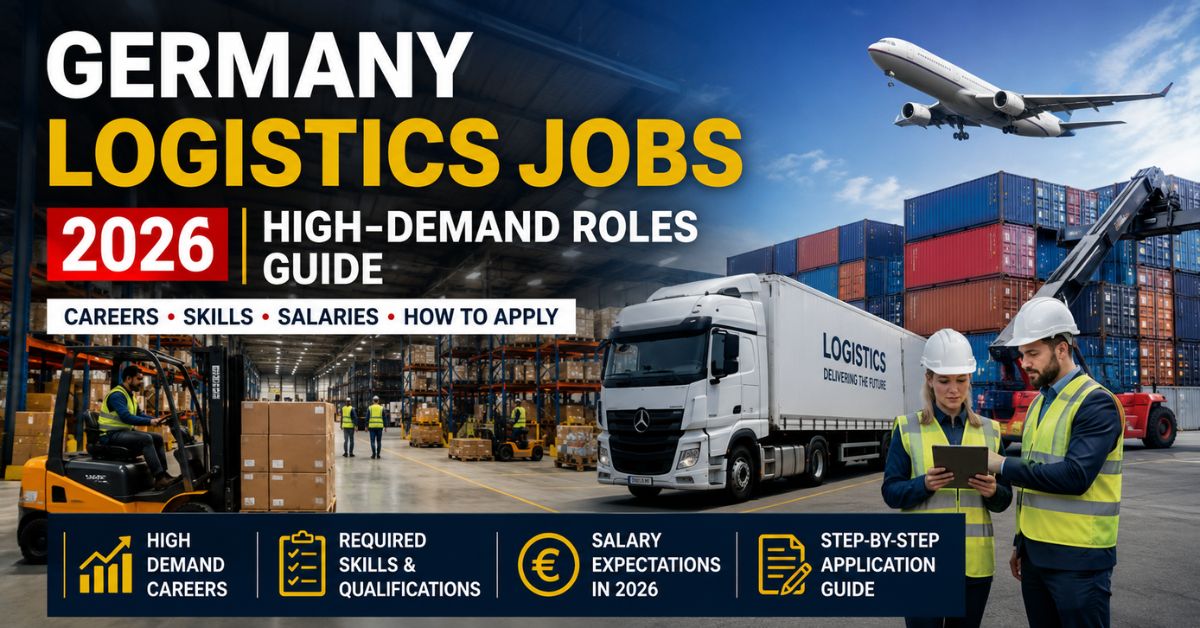
Germany Logistics Jobs 2026: High-Demand Careers, Salaries & Application Guide
Germany remains one of the economic powerhouses in Europe, with logistics at the center of the country’s manufacturing, retail, automotive, healthcare, and international trade networks. With the growing emphasis on optimizing supply chains and adopting technology, Germany’s logistics market will see consistent demand for skilled professionals through 2026. The job market offers excellent opportunities for local workers, recent graduates, and skilled foreign professionals. However, understanding the nuances of Germany’s logistics job market can be challenging, including qualification requirements, work permit guidelines, salary expectations, and specific skills in demand.
Germany’s Logistics Industry in 2026
Germany has one of the most developed logistics infrastructures in the world. The country’s strategic location, extensive highway and rail networks, airports, inland waterways, and deep-water ports makes it a logistics and transportation hub.
In particular, Germany’s logistics market is expected to see significant demand for skilled workers in 2026 due to several long-term trends, including
the growth of e-commerce,advancements in warehouse automation,expanding international trade,and the need for sustainable transport.
At the same time, Germany’s logistics sector is expected to leverage emerging technologies such as artificial intelligence, data analytics, and automation to optimize its operations. As a result, logistics employers in Germany are in need of skilled workers who can embrace digital innovation in the logistics industry.
Overview of the Best Jobs in Germany’s Logistics Sector in 2026
There are several logistics jobs in demand in Germany in 2026, including supply chain manager, warehouse supervisor, logistics coordinator, transportation planner, procurement specialist, inventory analyst, freight forwarding specialist, logistics data analyst, forklift operator, and customs compliance specialist.
Below are the key features of jobs in demand in Germany’s logistics sector:
- Numerous job opportunities across multiple industries
- Opportunities for career advancement and competitive salaries
- Growing emphasis on digital logistics and warehouse automation
- Rising need for supply chain analysts and planners
- International companies seeking multilingual workers
- Emphasis on sustainability and green logistics
High Demand For Logistics Jobs in Germany in 2026
- Germany’s logistics job market will witness consistent demand for skilled workers for several reasons.
- The first is the growing emphasis on e-commerce in Germany and across Europe, which has led to the need for more warehousing and distribution centers. Additionally, businesses are investing in optimizing their supply chains for agility and resilience, which requires skilled logistics professionals.
- There is also a shortage of skilled workers in Germany, which means that companies are willing to hire logistics workers even with less than perfect qualifications.
- Other reasons why there is a high demand for skilled logistics jobs in Germany in 2026 include:
- The need for sustainable supply chains due to environmental concerns.
Germany is investing in alternative fuel vehicles, smart logistics to reduce emissions, and optimizing transport networks to minimize the carbon footprint.
Top 10 Highest Paying Jobs in Germany’s Logistics Sector in 2026
Supply Chain Manager
Supply chain managers oversee procurement, production planning, warehousing, logistics, and transportation functions in order to meet business needs.
Key Responsibilities:
- Managing suppliers, production, inventory, transportation, and distribution networks.
- Planning and cost-saving initiatives to reduce logistics costs while meeting customer needs.
- Improving operational performance.
Supply chain managers can work in manufacturing, retail, healthcare, and other industries. The job typically requires a bachelor’s degree in supply chain management, business administration, or a related discipline.
Warehouse Operations Manager
Warehouse managers are responsible for overseeing day-to-day warehouse operations, including staff, inventory, safety, and other functions.
Key Responsibilities:
- Managing staff and ensuring safe working conditions
- Supervising the receipt, storage, and dispatch of goods
- Order picking and warehouse automation
The job of a warehouse manager is in demand due to the rising popularity of e-commerce, the need for automation, and the complexity of logistics distribution networks. Most warehouse managers have a bachelor’s degree in business administration or a related field, together with working knowledge of warehouse equipment and logistics software.
Logistics Coordinator
Logistics coordinators are responsible for managing the flow of goods from suppliers to distribution centers and then to retailers and customers.
Key Responsibilities:
- Scheduling and freight management
- Document preparation and carrier communication
- Customer communication, delivery tracking, and issue resolution
A career in logistics coordination is a great way to get started in the logistics industry. Employers usually look for candidates with a high school diploma or some college education. Previous experience in logistics helps secure better opportunities.
Transportation Planner
Transportation planners are responsible for managing the distribution and transportation of goods.
Key Responsibilities:
- Designing efficient delivery routes
- Optimizing use of commercial vehicles
- Managing fuel costs and delivery schedules
Transportation planning is a crucial function in the logistics industry due to the rising need for cost-efficiency and sustainability. This career requires excellent planning skills, together with an in-depth understanding of transportation regulations.
Procurement Specialist
Procurement officers manage the purchasing function in a company, including supplier relations, purchase order management, and cost management.
Key Responsibilities:
- Managing the purchase process from identifying needs to receiving goods.
- Negotiating contracts and managing suppliers.
- Analyzing costs to help reduce spending without compromising on quality.
This career path is suitable for people with strong analytical and interpersonal skills. Most employers require a bachelor’s degree in a business-related discipline, together with professional certifications.
Inventory Analyst
Inventory analysts help organizations optimize inventory management processes.
Key Responsibilities:
- Managing inventory levels while minimizing costs
- Forecasting demand and ensuring there are no stockouts at distribution centers or retail facilities
- Reporting to other departments concerning inventory trends and issues affecting supply chain operations.
With the growing adoption of supply chain technologies, inventory analysts are expected to leverage data analytics to help businesses make better decisions. As a result, this profession is in demand, and inventory analysts are in a position to earn excellent salaries, especially if they have knowledge of business intelligence tools.
Freight Forwarding Specialist
Freight forwarders specialize in international shipping and are responsible for transporting goods from one country to another.
Key Responsibilities:
- Managing import and export documentation and ensuring compliance with customs regulations.
- Arranging for international transportation
This occupation is in demand due to the need for international trade and the complex nature of international shipping regulations.
Logistics Data Analyst
Many logistics companies are adopting analytics tools to drive performance improvement, which has created demand for logistics data analysts.
Key Responsibilities:
- Preparing dashboards and reports using data
- Enhancing processes through data insights
- Making recommendations and forecasts about supply chain operations.
This position usually requires skills in data analytics and business intelligence, together with an understanding of supply chain analytics. With the right set of skills, you can be at the top of your logistics career, helping companies make data-driven decisions.
Forklift Operator and Warehouse Associate
While automation is on the rise, most logistics companies still require human labor. As a result, there is a need for workers in distribution centers and manufacturing facilities who operate forklifts and other equipment. These jobs can be great entry-level positions in the logistics industry, although they may require prior experience.
Key Responsibilities:
- Operating a forklift to load and unload goods
- Receiving and inspecting shipments
- Storing and retrieving goods from designated locations
- Monitoring quality and inventory levels
Customs Compliance Specialist
Customs compliance officers help international traders understand and follow customs and import-export regulations.
Key Responsibilities:
- Customs documentation and compliance
- Trade classification and regulatory compliance
Medical Writing involves a variety of tasks and qualifications, among which are the following:
Required Qualifications and Skills
Educational Background
Employers may seek:
- Logistics degrees
- Supply chain management degrees
- Business administration qualifications
- Engineering backgrounds
- Vocational logistics certifications
Most posts in the operational level may not have as much formal qualifications as those held in the management level.
Technical Skills
Technical skills that are in high demand are:
- Warehouse Management Systems (WMS)
- Enterprise Resource Planning (ERP)
- SAP knowledge
- Microsoft Excel
- Data analytics
- Inventory software
- Transportation Management Systems (TMS)
The significance of digital literacy is continually increasing.
Soft Skills
The skills that successful logistics professionals exhibit are:
- Communication
- Problem-solving
- Time management
- Organization
- Leadership
- Adaptability
- Teamwork
- Decision-making
These are some of the skills that are often highlighted in job postings.
Language Skills
There are numerous multinational companies that are operating in English.
Opportunities for employment may be very good, however, if there is a need for local communication in operational jobs, German language skills can be a big advantage.
German language skills also open the door for better career prospects in the future.
Germany Logistics Jobs Salary Expectations in 2026
Earnings vary with experience, qualifications, company size, location and responsibilities.
Here are some representative salary bands:
- Warehouse Associate: €28,000–€38,000
- Logistics Coordinator: €35,000–€50,000
- Inventory Analyst: €40,000–€60,000
- Transportation Planner: €42,000–€65,000
- Procurement Specialist: €45,000–€70,000
- Warehouse Manager: €50,000–€75,000
- Supply Chain Manager: €65,000–€100,000+
- Logistics Data Analyst: €55,000–€85,000
- Customs Compliance Specialist: €45,000–€70,000
Multinational companies and larger industrial areas usually offer better pay.
Step-by-Step Guide to Applying for Germany Logistics Jobs
Research Suitable Positions
Determine positions for which you are qualified, experienced, and motivated.
Research the job description thoroughly to gain an understanding of the expectations of employers.
Preparing a CV
German employers like to see well-structured resumes which list:
- Work experience
- Skills
- Certifications
- Technical expertise
- Languages
- Education
Maintain a neat and business-like layout.
Step 3: Prepare a Compelling Cover Letter
Explain:
- Why you want the position
- Relevant achievements
- Interest in the company
- Long-term career goals
Don’t use “off the shelf” applications.
Enhance Skills
Complete on-line courses in the following areas if necessary:
- Supply chain management
- Warehouse operations
- SAP
- Data analysis
- Excel
- Logistics software
The commitment to continuous learning is evident.
Prepare for Interviews
Employers often inquire about:
- Problem-solving examples
- Teamwork
- Logistics challenges
- Process improvements
- Customer service
- Leadership experience
Where possible use real examples from previous work.
Work Visa Considerations for International Applicants
Those seeking to find a logistics job in Germany should find out about the latest immigration and employment laws before applying.
Important considerations include:
- Valid work authorization
- Recognised qualifications, as appropriate
- Employer sponsorship (if required)
- Residence permit eligibility
- Language expectations
Immigration requirements may be subject to change and the applicant should always check the current requirements with official government sources in Germany before making an employment decision.
Benefits of Working in Germany’s Logistics Industry
There are a number of work benefits provided in the logistics sector.
These may include:
- Competitive salaries
- Structured career progression
- International work environments
- Ongoing training opportunities
- Stable industry demand
- Using sophisticated technology
- Professional development programs
Access to opportunities for specialization in high-value areas
Other areas in which many employers are strong are workplace safety, employee wellness and ongoing improvement programs.
Expert Tips for Building a Successful Logistics Career
Career long-term development is enhanced by professionals who keep learning their skills.
Here are some practical ideas:
- Learn German in parallel with English.
- Excellent excel skills and data analysis.
- Get hands-on experience in SAP/ERP software.
- To appreciate warehouse automation technologies.
- Develop understanding of international trade laws.
- Keep up to date with sustainable trends.
- Obtain recognised logistics qualifications.
- Enhance leadership and communication abilities.
Employers are looking for candidates who are technically experienced and have a business sense.
Tips to Avoid Common Mistakes
A lot of candidates lose out on the job, just by making unintentionally wrong mistakes.
Common mistakes include:
Submitting exactly the same job applications to all employers
- Ignoring required qualifications
- Overlooking language requirements
- Using outdated resumes
When students do not prepare for their interviews.Students not being prepared for their interview.
- Not doing your homework on the employer
- Over-stating credentials or experience
- Failure to take advantage of ongoing learning opportunities.
- A keen eye for detail can work in your favor in a job interview.
Also Read:UK Factory Worker Jobs with Work Visa 2026 | Salary, Visa & Application Guide
FAQs
-
Will there be jobs in logistics in Germany in the year 2026?
The present market scenario shows a steady demand of the warehouse and transportation industry, supply chain management, procurement, and logistics technology. Employment opportunities may fluctuate with the economy, region, and/or employer.
-
Are logistics jobs in Germany available for foreign nationals?
A large number of employers look at qualified international candidates. Requirements include work authorisation, qualifications, employer requirements and immigration eligibility.
-
Do you need to know German for this to be a requirement?
Requirements vary according to the job and employer. While other companies operate largely in English, many jobs directed toward operations and interactions with customers require competence in German.
-
What are the most important logistics skills?
These are the key skills and qualifications that employers are looking for: knowledge of the supply chain, ERP software experience, Excel skills, analytical thinking, communication, and knowledge of warehouse or transportation management systems.
-
Logistics as a career in Germany, is it right for a long term career?
Logistics is a diverse field with many applications and is rapidly growing and changing with the aid of automation, digitalization and sustainability measures, making it an attractive career choice for people who are looking for long-term career development.
Final Thoughts
In 2026, the future of logistics in Germany remains bright, driven by investments in modern supply chains, automation, sustainability, and digitalization, which will continue to create career opportunities in the logistics sector. Career opportunities are available for those who possess the right mix of technical skills, adaptability, and communication abilities in the operational, transportation, and procurement aspects of warehouse operations, as well as in data analytics and supply chain management.
It’s not just about making applications to be successful in this competitive market. By investing in professional development, candidates who customize their resumes, know what employers look for, and remain attuned to industry trends are more likely to make a splash. International candidates are also advised to check their eligibility to immigration and employment laws before taking up any opportunities.